The trained person's paperwork
Harvested game is food of animal origin and the initial examination by a trained person is compulsory. HUNTERRA keeps that paperwork online — from the certificate to the request for examination to the trichinella test.
Written by David C. HájíčekManaging director, HUNTERRA
Harvested game is food of animal origin and its initial examination by a trained person is compulsory. In HUNTERRA the trained person enters the details of their certificate in the account settings and appears in the list from which a hunter picks them using the "Send to the trained person" button. The harvest is locked until the result is recorded. The validity of the authorisation is checked continuously against the lists published by the state veterinary administration. A request for a trichinella test can be generated in the web app and the result attached directly to the harvest.
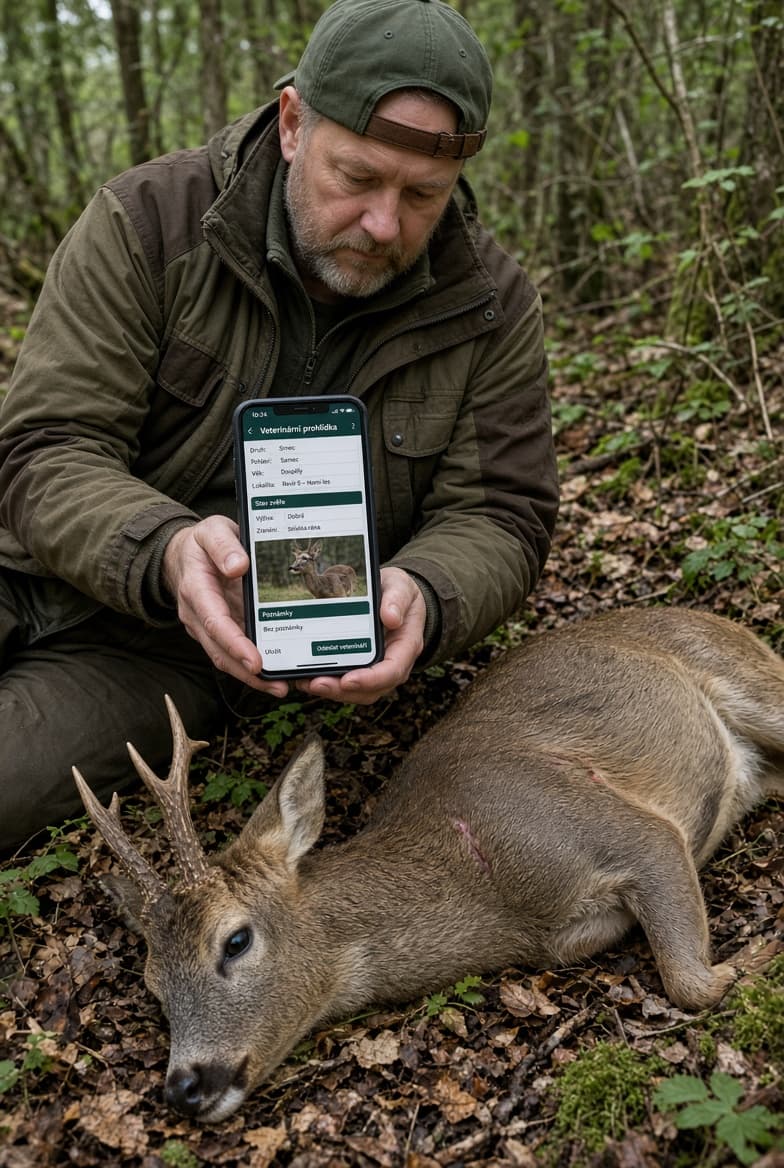
Harvested game is not just a trophy or venison for your own table. It is food of animal origin, subject to strict hygiene and veterinary rules. The key role in the whole process belongs to the trained person who examines the game. Their paperwork is not a formality — it is a compulsory step that protects consumers and hunters alike from health risks.
HUNTERRA brings a simple tool that takes care of the compulsory records of game meat examiners.
How to become a trained person
A trained person is someone who has completed specialised training under European rules (in particular Regulation (EC) No 853/2004) and obtained a certificate of competence to examine the bodies of wild game. The training is run by veterinary universities among others, and on passing it the participant receives a certificate, a stamp and a trained person's card.
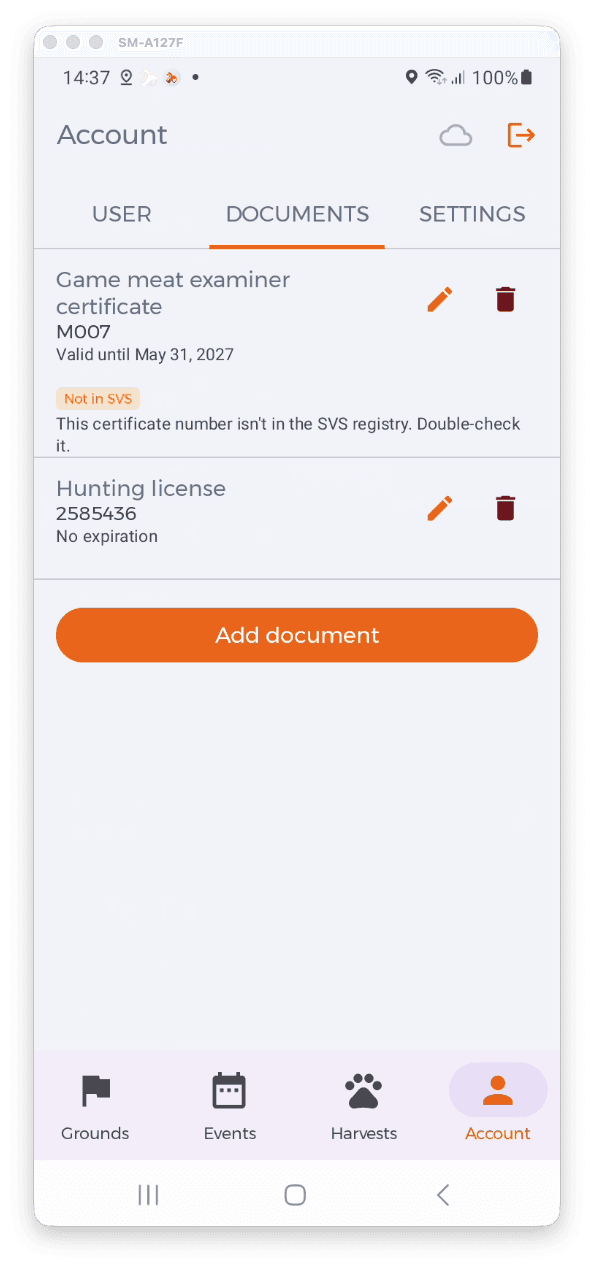
The card and the stamp carry a registration number. And it is by entering the details from that card that the whole story of the trained person in HUNTERRA begins.
The details of the card can be entered in the user account settings, in the documents section. If everything is entered correctly, the user will from then on appear in the list of trained persons that a hunter can choose from when requesting a veterinary examination of a harvested animal.
How to request an examination
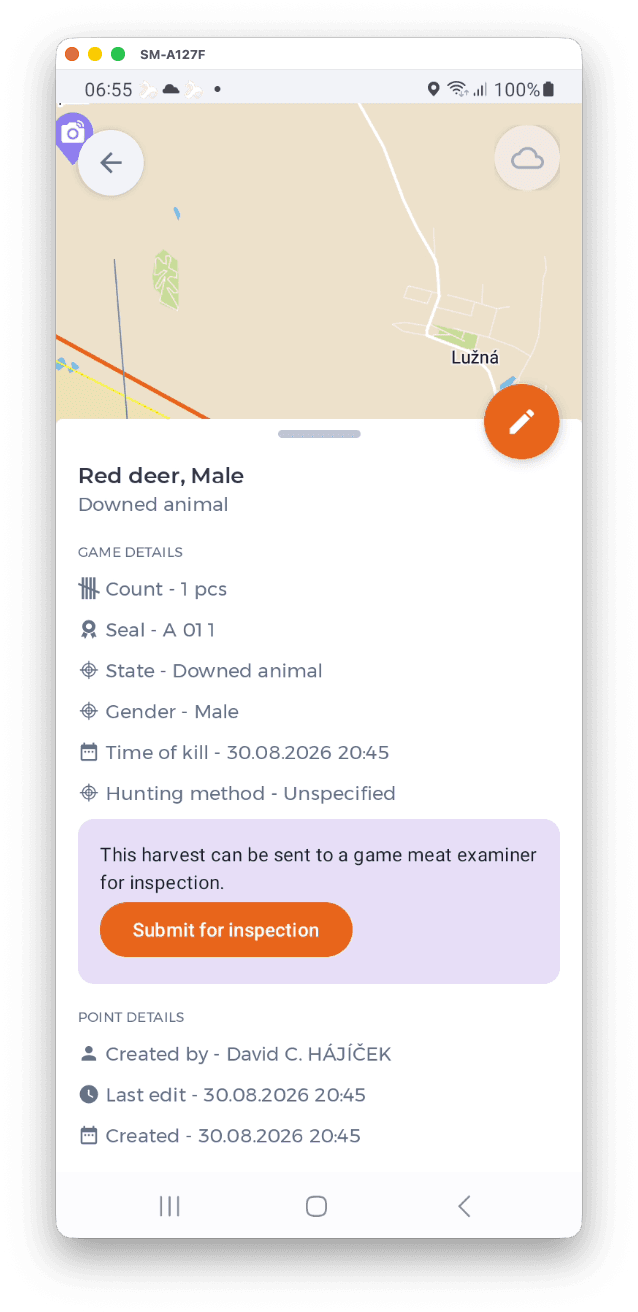
Every harvest properly entered in HUNTERRA gets a "Send to the trained person" button. Once it is used, the hunter picks a trained person from the list, the harvest is locked and cannot be edited until the trained person records the result of the examination.
The list of trained persons and the validity of their authorisation is checked continuously against the lists published by the state veterinary administration. When choosing, the hunter therefore always sees whether the authorisation is valid.
An assigned animal can be taken back from the trained person at any time before the result is recorded, and another one chosen instead.
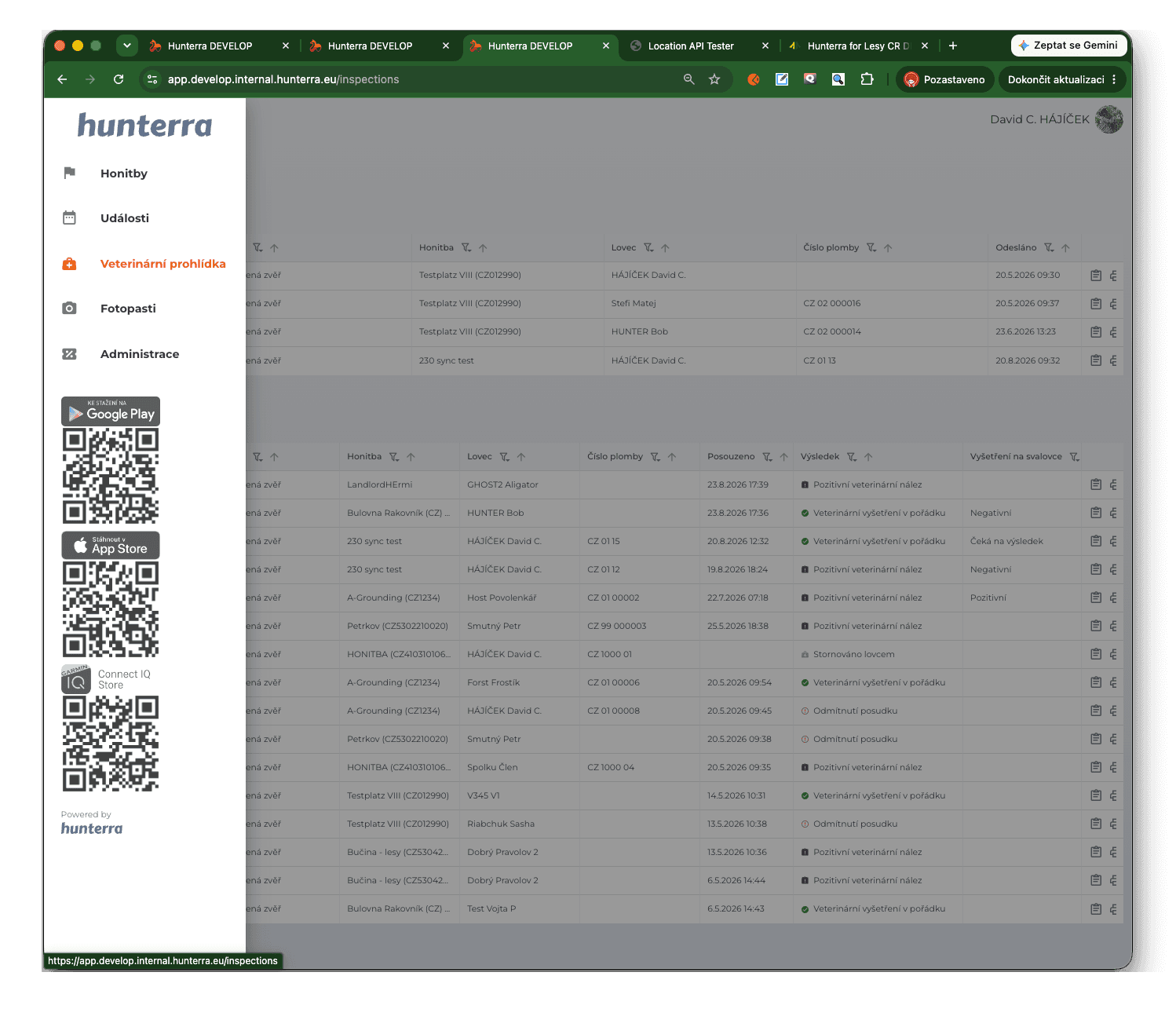
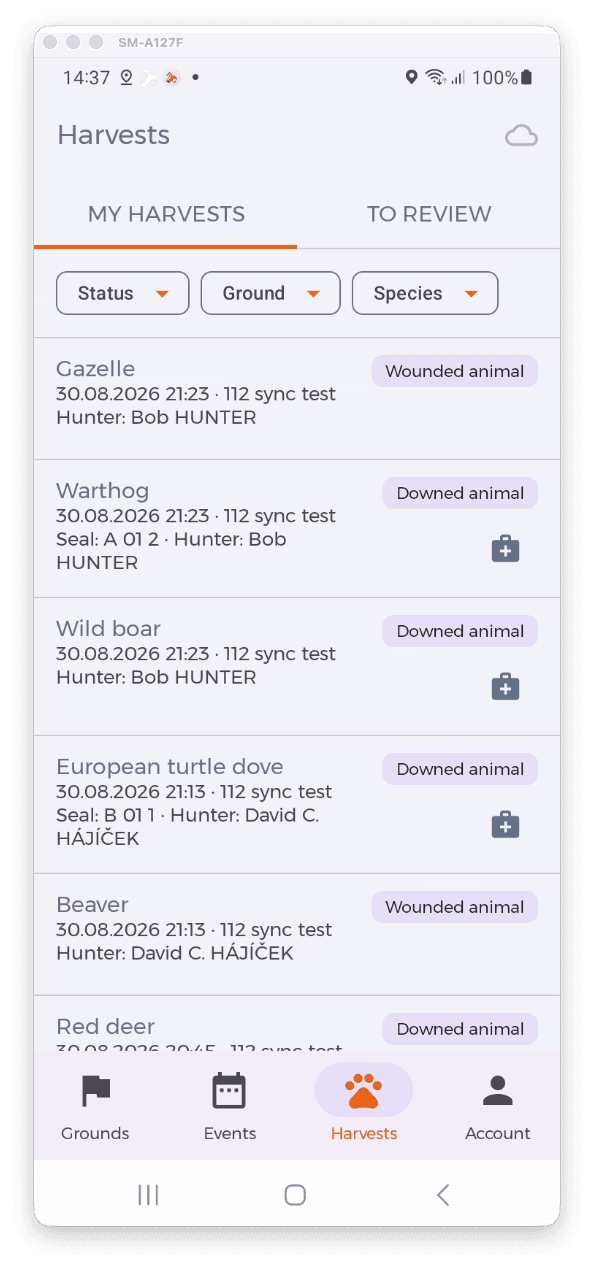
All harvests sent for veterinary examination are also visible to the hunter under "Harvests" on the main screen of the mobile app, or in the panel on the left-hand side of the web app.
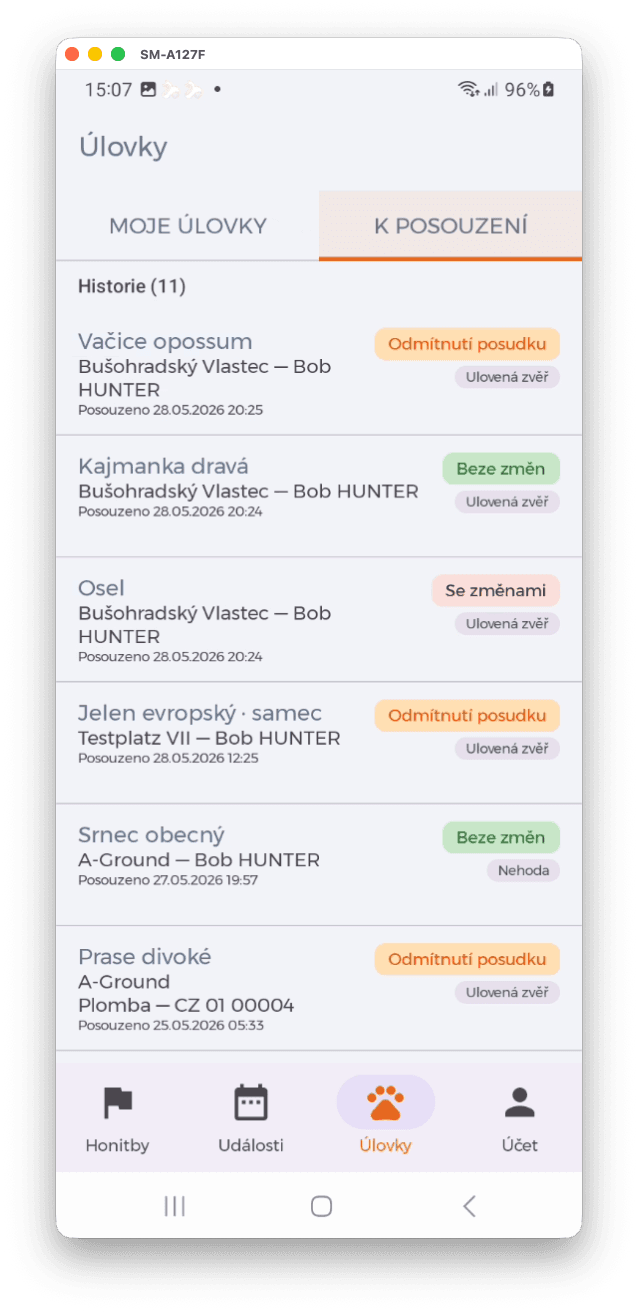
The trained person sees a similar list, but with their full agenda.
The trained person's main duties
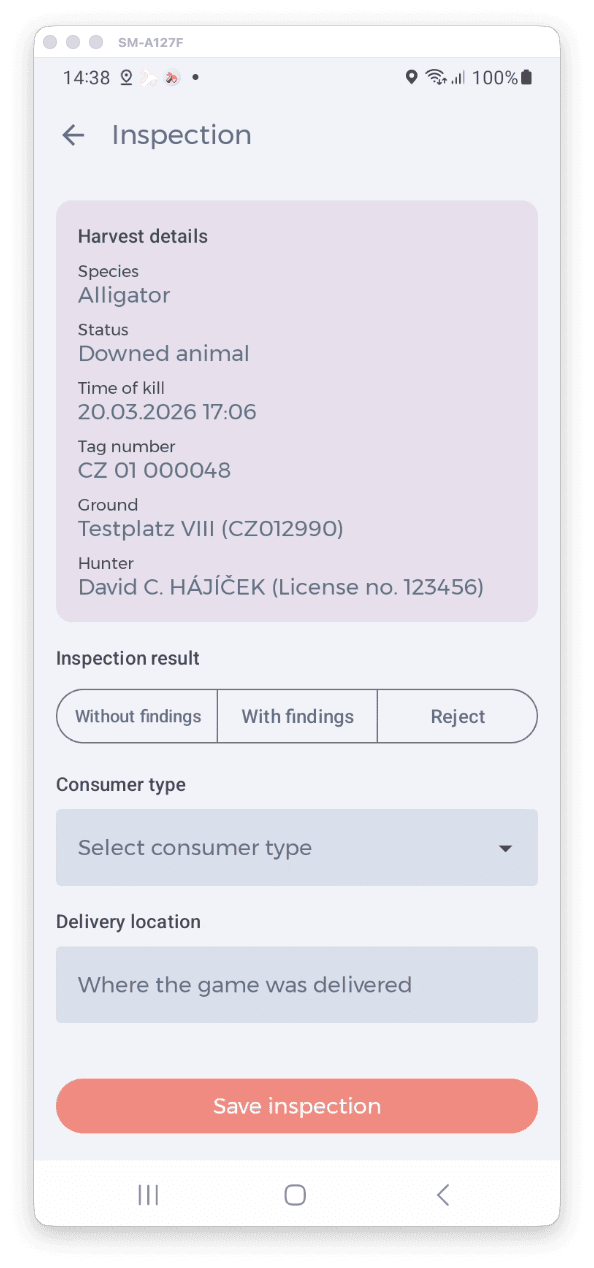
Their main duty is to carry out the initial examination of the harvested game as soon as possible after it is taken. They check the overall condition of the animal and look for visible signs of disease, injury or other abnormalities. If the examination reveals a possible health risk, they mark the animal on the certificate of origin with the word "RISK" and the ground's user is obliged to present the meat to an official veterinarian.
The trained person keeps records of the outcome — thanks to HUNTERRA, conveniently and online.
Records and administrative duties
A trained person is obliged to keep records of:
- the species and numbers of game harvested and examined,
- the place and time it was taken,
- the results of the examinations,
- where the meat was delivered.
These records must be kept for at least two years and presented on request to the state veterinary supervision authorities. The ground's user is at the same time obliged to ensure that the examination is carried out in time and properly.
Why it matters
Keeping the trained person's paperwork properly is not only about following the rules. It is a practical tool of health protection, transparency and credibility for the way a hunting ground is run. When the whole process is digital, the risk of mistakes drops, communication with the veterinary administration speeds up, and every member of the ground has a clear picture of what is happening with the meat.
HUNTERRA offers these features so that hunters can concentrate on what matters — the work in the field and the care of the game — and keep the bureaucracy as simple as possible.
Testing for trichinella
Special attention goes to game susceptible to trichinella, wild boar above all. The ground's user must arrange a laboratory test for trichinella. A muscle sample is sent to an accredited laboratory or a state veterinary institute, and only after a negative result may the meat be handled further (including, in some cases, for personal consumption).
HUNTERRA makes this paperwork considerably simpler as well. The request for the test can be generated in the web app and the result then attached directly to the harvest.
We are working hard together with the state veterinary administration on fully digitising this agenda, so that a hunter's life gets simpler still. Read more zde.
Notifications
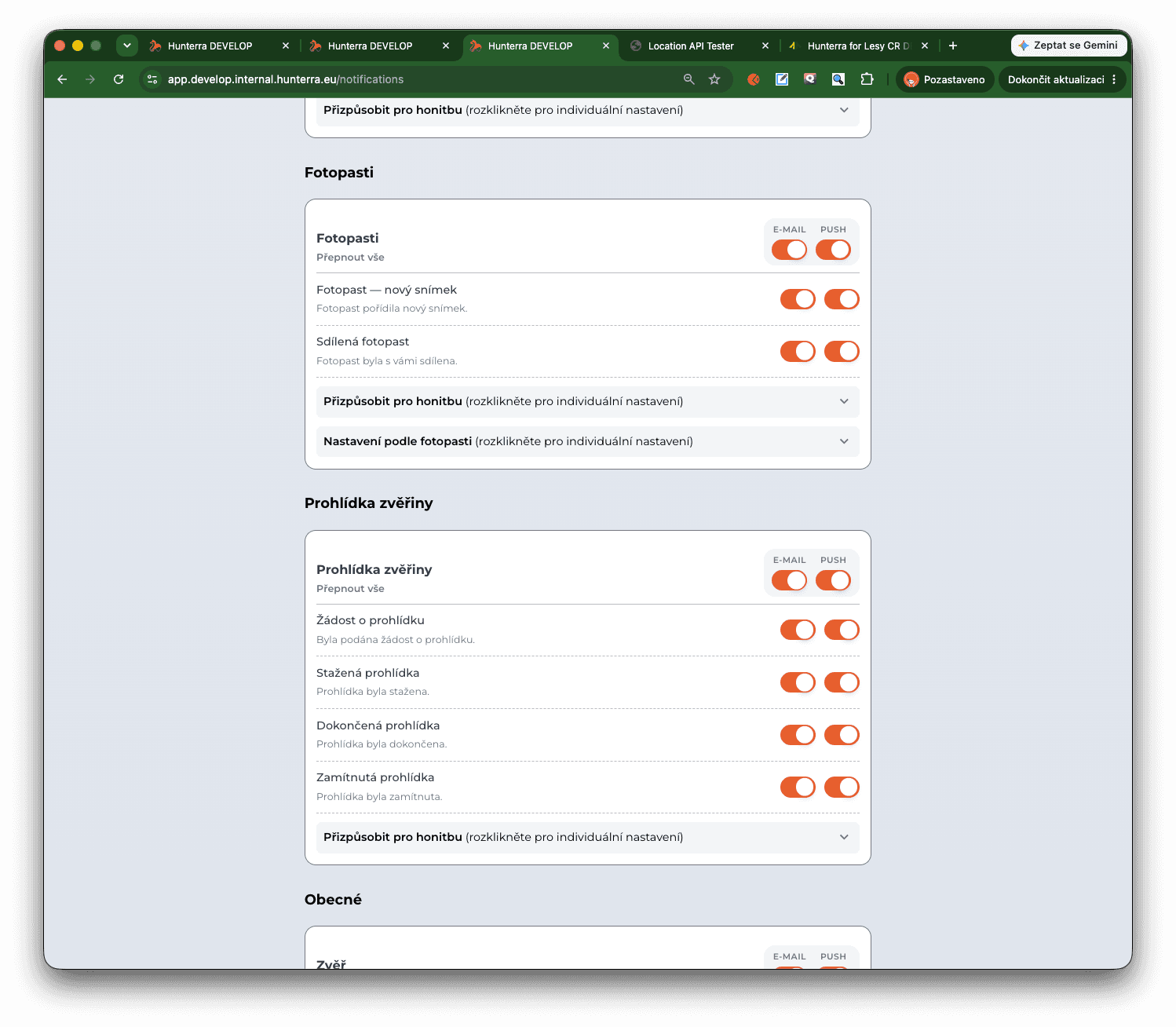
As with every event on the HUNTERRA platform, users can set up notifications for veterinary examinations too, so that nothing passes them by.